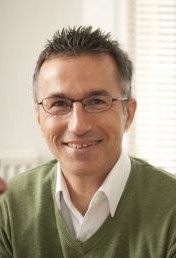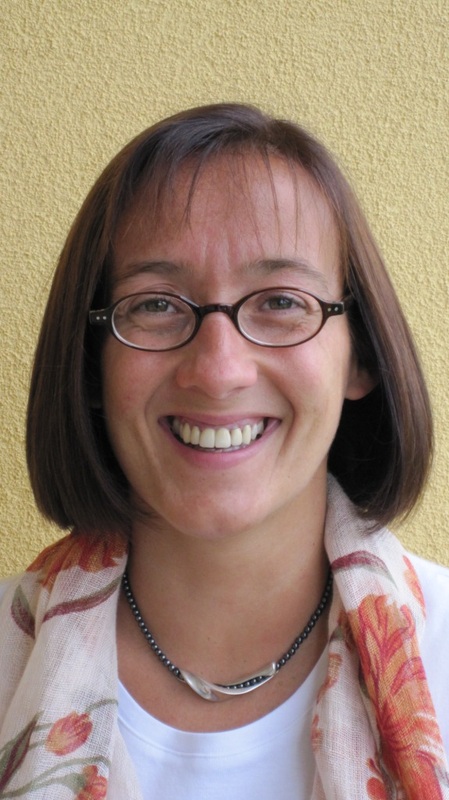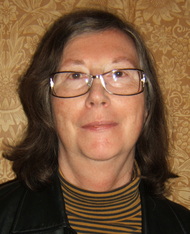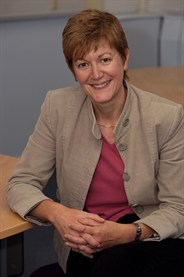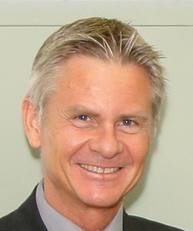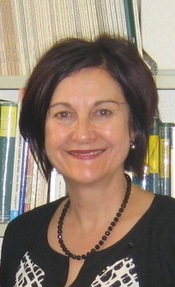
3rd international conference on Classroom-oriented research: Reconciling theory and practice Date: 14-16 October 2013 Location: Konin, Poland Presenters:Anne Burns (Aston University) Jean-Marc Dewaele (Birkbeck College, University of London) Elaine Horwitz (University of Texas at Austin) David Nunan (Anaheim University) Norbert Schmitt (University of Nottingham) David Singleton (Trinity College, Dublin; University of Pannonia, Veszprém) Paul Meara (Swansea University) Organisers: Institute of Modern LanguagesState School of Higher Professional Education, Konin, Department of English Studies, Faculty of Pedagogy and Fine Arts, Adam Mickiewicz University, Kalisz and Institute of English Studies, Faculty of Philology, University of Łódź in collaboration with IATEFL Research SIG Download the Call for papers and Registration Form here (pdf)There is a scholarship opportunity for Research SIG members wishing to attend this event. More details hereScholarship application deadline: 10 June 2013
Article Discussion: 'Own-language use in language teaching and learning’Date: 18 - 29 March 2013 Article: 'Own-language use in language teaching and learning', by Graham Hall and Guy Cook. Guest moderator: Graham Hall, Northumbria University, Newcastle upon Tyne (UK) Location: ReSIG YahooGroup Download article hereThis event is open to ReSIG members and non-members. You can join our YahooGroup for free here.How to participate:- Join our YahooGroup at the link above. if you're not a member yet. - Download the article at the link above. - Read the article. - To help you get ready for the discussion, here are some possible questions, suggested by Graham, apart from ones you might have of your own: 1. In the article we use the terminology ‘own-language use’ rather than e.g.’ L1 use’ or ‘mother tongue us’e – does worrying about terminology this much matter? Is it appropriate/useful to talk about 'own' and 'new' (instead of e.g. 'foreign' or 'second' language)? 2. To what extent has there been a ‘gap’ between ‘the literature’ and ‘classrooms’ over the last 100 or more years when it comes to own-language use? 3. To what extent do you accept/allow own-language use in your own teaching – by yourself as a teacher or by your students? To what extent does own-language use occur in your institution and context more generally and what are your attitudes towards it? 4. The article discusses ‘teacher guilt’ towards own-language use. Why do/might teachers feel guilty about the issue? Is it something to feel guilty about? 5. To what extent do you agree with the reasons and rationale for own-language use outlined in the article? To what extent do these reasons ‘ring true’ in your experience? 6. The article mentions the search for ‘optimal’ own-language use? Can we ever work out what this might be? 7. To what extent is our discussion here / the discussion in the article only relevant to ‘non-NESTs’; are these discussions relevant to NESTs and to multilingual classes? 8. Is there a place for more discussion of own-language use in teacher training and education programmes (pre- and in-service)? What ‘input’ have you experienced about the issues in your own training? How has this related to your own professional life? 9. What kind(s) of research would be valuable for taking things forward in the area of own-language use vs. new-language use in ELT?
Click on the link below to read online or download a copy of Kuchah and Pinter's recent article: Kuchah, K. & Pinter, A. (2012). ' Was this an interview?' Breaking the power barrier in adult-child interviews in an African context. Issues In Educational Research, 22(3), 283-297. This event is open to ReSIG members and non-members. You can join our YahooGroup for free here.How to participate:- Join our YahooGroup at the link above. if you're not a member yet. - Attend the webinar - please see details here. - Download the article at the link above. - Read the article. - Read the summary of webinar and a few questions below (to be posted shortly after the webinar). The ModeratorShelagh Rixon's early career was with the British Council with administrative, training and teaching roles in varied countries. Between 1991 and 2010 she was a Lecturer then Associate Professor at Warwick University, co-ordinating the MA in ELT for Young Learners. Her interest in the appropriate assessment of Young Learners developed from her interest in appropriate child-friendly pedagogy. She has recently completed a PhD in on pedagogical systems and practices in the early reading instruction of Young Learners of English. With Szilvia Papp, she is co-author of a book for the Cambridge ESOL SiLT series on assessing Young Learners.
RESEARCH SIG DAY at the IATEFL Conference in Liverpool
DATE: THURSDAY 11TH APRIL, 2013
Check out our programme below!. Also downloadable here as a pdf file.
Why not stay with us for the whole day?!
10.35-11.20 (Hall 11a)
Introduction to Research SIG Day, followed by
Introducing IRIS: a free, online resource for language teaching research
Presenter: Emma Marsden (University of York, UK)
IRIS is a freely accessible, international database of materials that have been used to collect data for research into second language learning and teaching. We demonstrate the search and download facilities and review some of the content of IRIS, illustrating the kinds of reseach areas and data collection methods that could help teachers and students who are engaging in research.
11.20-11.55 Break
11.55-12.30 (Hall 11a)
Mobigam: language on the move in Gujarat Presenters:Richard Badger (University of Leeds, UK) James Simpson (University of Leeds, UK) Atanu Bhattacharya (Central University of Gujarat, India) Sunil Shah (H.M. Patel Institute of English Training & Research, India) This presentation introduces the Mobigam project on the use of mobile technologies (e.g. mobile phones, tablets, game consoles) in language learning in Gujarat, India. The project involves a new partnership between a network of language teachers and researchers in India and the UK devoted to understanding how mobile technologies can be used in language learning.
12.30-13.00 (Hall 11a)
Using Mixed Methods to Explore ‘Ecologies of Schooling’
Presenter: Margaret Hawkins (University of Wisconsin-Madison, USA)
Reporting on a mixed-methods study of schooling for immigrant students in non-gateway districts in the Midwestern United States, this paper delivers an analysis of circulating discourses and practices in educational settings, and reflects on ecologies of schooling through the lens of isolation. Discussion will include attention to study design and research approach and methods.
13.00-14.00 Lunch
14.00-14.30 (Hall 3a)
Language Learning Histories in Teaching, Learning and Research
Presenters: Sarah Mercer (University of Graz, Austria) David Nunan (Anaheim University, USA)
Language learning histories provide rich data from the learner perspective and in learners’ own voices. In this talk, we show how narratives can be useful for researchers, teachers and the learners themselves, and we discuss how using stories from and about learners places them where they should rightfully be - at the centre of the teaching and learning process.
14.45-15.30 (Hall 11a)
Research SIG Open Forum
The annual meeting of SIG members and others interested in engaging with or in ELT research.
15.30-16.05 Break
16.05-16.50 (Hall 11a)
Combining teaching, learning and research: an exploratory practice approach [Workshop]
Presenters: Ana Inés Salvi (University of Warwick, UK) Yasmin Dar (University of Leicester, UK) Judith Hanks (University of Leeds, UK)
Practitioner research offers exciting opportunities for greater understanding of our classroom language learning lives. So why don’t teachers and learners do more research? Using their experiences of Exploratory Practice in EAP contexts, the panel members will discuss ways in which both teachers and learners can integrate research with teaching and learning in their classrooms.
17.05-17.35 (Hall 11a)
Growing as researchers: insider/outsider perspectives at work
Presenters: Sara Hannam (Oxford Brookes International, Oxford Brookes University, UK) Radmila Popovic (SIT Graduate Institute / World Learning, USA)
This interactive session engages audience members in discussion on the role of critical dialogic collaboration in research. We explore what it means to be an insider and outsider in a research process and in our understanding of a specific context (Serbia), and look at additional ways we enhanced each other's understanding in a partnership of practice and knowledge building.
17.50-18.20 (Hall 11a)
Investigating the impact of action research: an Australian case study Presenters:Fiona Barker (Cambridge English, UK) Katherine Brandon (English Australia, Australia) Hanan Khalifa (Cambridge English, UK) Action research aims to enhance pedagogical practice and can be viewed as a type of professional development in which practitioners explore and address their own identified teaching challenges. This paper evaluates the impact of a national program in which teachers undertake investigations into their own classroom-based teaching within English language intensive courses for overseas students.
Researching with Young Learners Webinar - organised by ReSIG in cooperation with IATEFL Young Learners SIG Date: Sunday, 27 January 2013 Time: 1.30-3.30 pm GMT Presenters: Harry Kuchah Kuchah & Annamaria Pinter Location: IATEFL online conference room LATEST NEWS: The webinar has now finished. A full recording is freely available here (this takes some time to download but is worth the wait!) Follow-up event: There will be a follow-up discussion on our YahooGroup, open to members and non-members. Please click here for further details. The WebinarAs adults and teachers, we all have personal and shared opinions about pedagogic practices that can motivate young learners in the language classroom. However, it is rarely suggested that our opinions and practices might be at odds with the opinions and interests of the same learners for whom we develop these practices. While it is common practice to elicit feedback on teaching practices from adult learners, there is still little research in which adult researchers and teachers seek children’s perspectives about the way teaching should happen in their classrooms. In this webinar talk we will be sharing some thoughts about what ‘good practice’ may mean when ‘adult outsiders’ attempt to elicit interview data from children. The talk will start with a discussion about the methodological and ethical dilemmas relevant to interviewing 10-year-old children in elementary schools for research purposes. The context (Cameroon) and the actual procedures of the data collection will be described next, and we will share some of the data and our analysis of it, focussing on the complexities and challenges of interpretation, bringing together both process and product (how the conversation unfolded and what the children actually said). Then we will match children’s perspectives with those of their teachers to show that, while there may be shared perspectives of good teaching practices, adult perspectives of what constitutes good teaching with young learners may not always be enough to rely on. Finally, we will summarise the most important implications for both classroom teachers and researchers working with child subjects. Click on the title of the article below to read it online or download the pdf:Kuchah, K. & Pinter, A. (2012). 'Was this an interview?' Breaking the power barrier in adult-child interviews in an African context. Issues In Educational Research, 22(3), 283-297. The Presenters Annamaria Pinter is an Associate Professor in the Centre for Applied Linguistics, University of Warwick, UK. She lectures at masters and doctoral levels and supervises theses in the area of teaching languages to children. Her particular interests include task based learning, socio-cultural theory and materials design. She has been involved in teacher development programmes both at Warwick and overseas. She has published widely in the area of teaching English to young learners. She is the author of Teaching Young Language Learners (Oxford University Press (2006)) and Children Learning Second Languages (Palgrave Macmillan (2011). Harry Kuchah Kuchah has worked for 14 years as ELT teacher trainer and inspector at primary and secondary levels in Cameroon. He is Teaching Fellow in Applied Linguistics in the School of English, University of Sheffield and currently completing his PhD research at the University of Warwick. His interests are in teaching and researching young learners, context-appropriate ELT methodology, teaching large and multi-grade classes, learner autonomy and teacher development. He has published widely about the African ELT context.
Title: Doing Action Research in the Language Classroom Date: Saturday 3 November 2012 Presenter: Anne Burns Location: Reading University, Reading, England Time: 10am-4pm (with registration from 9.30 onwards) Registration here
Early-bird (cheaper rate) registration until 1 October. Online registration closes on 26 October. There is a scholarship opportunity for Research SIG members wishing to attend this event. Scholarship application deadline: 24 September. Find out about the winner here! Further details: Format: One-day seminar consisting of presenter input, participant discussion, group tasks and preparation of action plans. Overview:Do you have “burning questions” about your classroom, your students or your own teaching? Are you curious about what drives the interactions and practices in your classroom? Are you keen on professionally developing your knowledge about practitioner research? Do you want to prepare plans for classroom investigations and discuss them with other teacher researchers? If so, this seminar is for you. In the first part , we will explore the concept and processes of action research and what it can offer teachers who want to conduct investigations in their own classrooms. Then, we will take a closer look at developing an action research focus, deciding on classroom interventions, and collecting and analysing data to inform decisions about further practice. The role and purpose of reflection in action research will also be highlighted. In the final part of the seminar there will be opportunities for participants to develop their own plans for action research, discuss them with colleagues and get feedback on their current ideas. The approach to participation in this seminar is one of collaborating as professionals, sharing ideas about the highs and lows of classroom experiences and discussing how to investigate them. Therefore, participants are encouraged to bring along any issues, puzzles, dilemmas or inspirations they currently have about their classroom. Presenter: Anne Burns, PhD, Professor in Language Education, Aston University, Professor of TESOL, University of New South Wales, Visiting Professor, University of Stockholm
Article Discussion: 'Review of developments in research into English as a Lingua Franca’ Date: 9 - 20 July 2012 Article: 'Review of developments in research into English as a Lingua Franca’, by Jennifer Jenkins, Alessia Cogo and Martin Dewey Guest moderators: Will Baker (University of Southampton), Alessia Cogo (University of Southampton) and Martin Dewey (King’s College London) Location: ReSIG YahooGroup Download article hereThis event is open to ReSIG members and non-members. You can join our YahooGroup for free here. How to participate:- Join our YahooGroup at the link above. if you're not a member yet. - Download the article at the link above. - Read the article. - To help you get ready for the discussion, here are some possible questions, suggested by our guest moderators, apart from ones you might have of your own: 1. “ELF researchers feel their responsibility is to make current research findings accessible in a way that enables teachers to reconsider their beliefs and practices and make informed decisions about the significance of ELF for their own individual teaching contexts” (p. 306). Do you think this is an appropriate aim for ELF research? Do you think ELF researchers have been successful in doing this? If not, how might ELF research engage more with language teachers? 2. The article comments that language use in ELF communication is highly fluid and does not conform to a pre-defined set of norms (see p. 288-292). What implications does this raise for how teachers approach language in the classroom? What forms of English can or should we teach and how should we teach them? 3. Research indicates that ELF is used to represent and create a range of ‘cultures’ that goes beyond the traditional associations of English with UK and US culture (however these might be defined) (e.g. Baker, 2009, cited on p. 297). What does this mean for the cultural content of English language classrooms? 4. “BELF studies demonstrate that intercultural communication skills rather than NS English correctness are key in BELF contexts, and BELF researchers therefore tend to conclude that communication and accommodation, rather than mastery of NS English forms, should be the focus of business English instruction” (p.299). How do you feel about this conclusion given your own experiences of teaching (business) English? 5. Some of the studies cited in the article report that in ELF situations native speakers of English can be more difficult to understand than non-native speakers (see e.g. Kolocsai 2009, cited p. 302). Why do you think this might be? What consequences does this have for the model of an ‘ideal speaker of English’ that might be adopted? 6. One of the gaps in ELF research highlighted by the article is in writing. What implications, if any, do you think ELF might have for writing and the teaching of writing? 7. “As well as the signaling of non-understanding, the focus of ELF pragmatics research has been on how ELF speakers resolve instances of miscommunication, i.e. the strategies they use to respond to and negotiate an initial possibility of non-understanding.” (p. 293). Can insights from ELF pragmatics inform classroom pedagogy? What kind of pragmatic strategies and skills can be taught for communication in ELF contexts? 8. Discussions of ELF research have often indicated that current language testing is in need of considerable restructuring. What challenges does ELF research present to existing assessment practices? 9. What do you feel are the implications of ELF for pre-service and in-service teacher education? Should ELF be included in the syllabus for teacher training programmes (e.g. on CELTA and/or Delta)?
Researching Professional Talk (Pre-Conference Event) Date: 8 April 2013 Presenters: Steve Walsh (Newcastle University) and Steve Mann (Warwick University) Location: Liverpool, UK
Further details:This workshop will examine a range of approaches to collecting and using spoken data as a means of improving professional practice. The focus will be on helping participants to become active reflective practitioners and researchers of their own contexts. There will be an emphasis on data-led approaches which highlight the importance of dialogue and collaboration, our main argument being that most professional activities (including teaching and teacher education) are accomplished through talk. By studying the ways in which we interact, we can gain closer insights into professional practices and professional development. In the session, we’ll be demonstrating how, by using appropriate tools, classroom data, introspection and some kind of dialogue, practitioners can both improve their practices and make their teaching more enjoyable. By using actual data as empirical evidence and by focusing on the interactions which take place in any professional setting, we suggest how we might create active, engaged learning environments. We will cover a variety of contexts, including both language teaching and teacher-training perspectives. The session will cover: - Classroom observation
- Stimulated recall
- Using specialist frameworks
- Analysing classroom data
- Professional dialogue
- Promoting reflection
The session will end with suggestions for a range of research questions that need further attention and a discussion of research opportunities that exist. The approach will be very ‘hands-on’ and we’ll be making extensive use of audio and videotaped materials in addition to a range of ‘tools’ specifically designed for class-based research. Steve Walsh is Professor of Applied Linguistics at Newcastle University, and is author of Exploring Classroom Discourse: Language in Action (Routledge, 2011). His book Teacher Development and Classroom Interaction is due to be published by Edinburgh University Press in 2012. Steve Mann is an Associate Professor at the University of Warwick, and is author of Teacher Development: A Discourse for Individual and Group Development (VDM Verlag, 2011). He has previously taught at both Aston University and the University of Birmingham, as well as in Hong Kong, Japan and Europe.
Article Discussion: 'Materials development for language learning and teaching’ Date: 21 May - 1 June 2012 Article: 'Materials development for language learning and teaching', by Brian Tomlinson Guest moderator: John Gray, Institute of Education, University of London. Location: ReSIG YahooGroup Download article hereThis event is open to ReSIG members and non-members. You can join our YahooGroup for free here. How to participate: - Join our YahooGroup at the link above. if you're not a member yet. - Download the article at the link above. - Read the article. - To help you get ready for the discussion, here are some possible questions, suggested by John, apart from ones you might have of your own:
1. Do you agree with the suggestion that for materials development to become more credible, it needs to become more empirical? If so, which areas would you identify as being in need of research?
2. Tomlinson’s paper – in line with the tendency of much of the materials literature – is focused mainly on materials evaluation rather than materials analysis. From a research perspective, how do you view this tendency?
3. What is the best way to go about evaluating materials - given the proliferation of checklists and frameworks for materials evaluation, and even, as reported here, a set of questions to evaluate such instruments?
4. Given that most good teachers are said to engage in materials adaptation, what avenues for research do you see in this area?
5. The article points out that few academic theorists and researchers are actually involved in materials writing – although there have been exceptions in the past (e.g. Stephen Pit Corder) and in the present (Mike McCarthy). Who should write materials in your view?
6. What do you see as the relevance of corpus descriptions of language to materials writing – particularly with regard to materials for use in your own setting?
7. The paper suggests that both initial and in-service teacher education could do more to facilitate a move away from reliance on textbooks. Do you agree with this suggestion and, if so, how might it be facilitated?
8. The article mentions the uses of new technologies (e.g. mobile phones) in making language learning materials available to students. What kinds of research do think need to be undertaken to explore the actual affordances of new technologies for materials development?
9. In one study carried out in three countries Tomlinson reports that 92% of the teachers consulted regularly used a coursebook and that 78% of them were negative about coursebooks. How can this be explained?
10. In the section on ideology in materials, Tomlinson suggests that it is important for teachers and materials writers to develop ‘constructive criticality’ – do you agree, and if so, how might this be done?
 Dick Allwright Date: Saturday 7 July 2012Time: 10.30-16.30 Main presenters: Dick Allwright with Judith Hanks and Assia Slimani-Rolls, plus Yasmin Dar, Simon Gieve and Ana Ines Salvi Location: Leicester, England Registration here. (Online registration deadline - 29 June 2012) Further details Full Title: Exploratory Practice: Using class time to help teachers and learners develop as practitioners of teaching and learningThis practical workshop will be of particular interest to any teachers who would like both themselves and their learners to better understand their learning and teaching lives together. Format: One-day workshop consisting of input and both presenter-led and participant-led discussions, all related to a number of group tasks. Presenters: Dick Allwright, (Lancaster University, retired) with Judith Hanks (Leeds University) and Assia Slimani-Rolls (Regent’s College London), plus Yasmin Dar (Leicester University), Simon Gieve (Leicester University) and Ana Inés Salvi (Warwick University) OverviewImagine a large room with 200 schoolchildren and 50 teachers presenting their understandings of their learning and teaching lives to each other on posters that they have prepared as an integral part of their learning and teaching practices. This is the sort of thing that happens at the annual ‘EP Events’ in Rio de Janeiro, Brazil. ‘EP’ stands for ‘Exploratory Practice’, a fully inclusive approach to practitioner research, with learners and teachers, as practitioners of learning and teaching, adopting the role of practitioner researchers as their normal way of using classroom time. Using standard classroom pedagogic practices they develop their own understandings of their learning and teaching lives. This whole-day workshop will begin with: - a closer look at these ‘EP Events’ in Brazil: What happens? How do they work? Could such ‘EP Events’ happen here? How might that work?
- a dialogue with Dick Allwright about the origins and nature of EP
We will then consider several case studies that exemplify Exploratory Practice: - an investigation of the challenges for practitioners of implementing Exploratory Practice in an EAP context in Leeds, and the relationships between the principles and practices of EP (Judith Hanks)
- the use of EP as a theoretical framework for the development of a postgraduate certificate in learning and teaching in higher education with a focus on teaching international students in London (Assia Slimani-Rolls)
- other case studies of EP work based at the Universities of Leicester and Warwick will also be included.
Participants in the workshop will be invited to consider how EP principles relate to their own teaching and learning practices, with a focus on inclusivity, collegiality, sustainability, and the consequent development of trust relations. We will then look for ways in which such ideas might be incorporated into participants’ own teaching and learning situations. Details of main presenters:Dick Allwright taught at Essex University, where he pioneered language classroom research, before he moved to Lancaster University in 1978. There, his interest in classroom research shifted towards research as a contribution to teacher, and learner, development , via the notion of ‘Exploratory Practice’. Retired since 2003, he is still actively pursuing his interest in teacher and learner development. Judith Hanks has been teaching English since1987 in Italy, Singapore, at IH London, Lancaster University and (currently) the University of Leeds. She became interested in Exploratory Practice in 1997 and became a core member of the EP Group in Lancaster. She is co-author of The Developing Language Learner (Palgrave Macmillan), with Dick Allwright. Assia Slimani-Rolls researched the relationship between learning opportunities and learning outcomes for her PhD at Lancaster under Dick Allwright’s supervision. Her interests have more recently shifted towards teacher and learner development via EP. She is currently responsible for developing and co-ordinating the learning and teaching agenda across the Faculty of Business and Management in Regent’s College London. Location / car parkingThe event will be held in the Musuem Studies Building (19 University Road - see map), near the top of New Walk, at the west end of University Road. To get there, exit Leicester Station and turn left up London Road and walk up the hill. Cross over to the east side of London Road (the right hand side as you walk uphill) at one of the light-controlled pedestrian crossings. Turn left into University Road at the traffic lights, and left again into the venue site. It is not more than 15 minutes walk from Leicester Station up to the venue. It will be possible to make use of School of Education car parking (1) beside the Fraser Noble Hall, accessed from University Road; (2) in front of the Museum Studies building, accessed from University Road; (3) to the rear of the Museum Studies building, accessed from Princess Road East.There is also public pay-and-display parking on Victoria Park, accessed from Granville Road. Tea/coffee and lunch are provided, included in the registration fee.
|