Article Discussion: 'Materials development for language learning and teaching’ Date: 21 May - 1 June 2012 Article: 'Materials development for language learning and teaching', by Brian Tomlinson Guest moderator: John Gray, Institute of Education, University of London. Location: ReSIG YahooGroup Download article hereThis event is open to ReSIG members and non-members. You can join our YahooGroup for free here. How to participate: - Join our YahooGroup at the link above. if you're not a member yet. - Download the article at the link above. - Read the article. - To help you get ready for the discussion, here are some possible questions, suggested by John, apart from ones you might have of your own:
1. Do you agree with the suggestion that for materials development to become more credible, it needs to become more empirical? If so, which areas would you identify as being in need of research?
2. Tomlinson’s paper – in line with the tendency of much of the materials literature – is focused mainly on materials evaluation rather than materials analysis. From a research perspective, how do you view this tendency?
3. What is the best way to go about evaluating materials - given the proliferation of checklists and frameworks for materials evaluation, and even, as reported here, a set of questions to evaluate such instruments?
4. Given that most good teachers are said to engage in materials adaptation, what avenues for research do you see in this area?
5. The article points out that few academic theorists and researchers are actually involved in materials writing – although there have been exceptions in the past (e.g. Stephen Pit Corder) and in the present (Mike McCarthy). Who should write materials in your view?
6. What do you see as the relevance of corpus descriptions of language to materials writing – particularly with regard to materials for use in your own setting?
7. The paper suggests that both initial and in-service teacher education could do more to facilitate a move away from reliance on textbooks. Do you agree with this suggestion and, if so, how might it be facilitated?
8. The article mentions the uses of new technologies (e.g. mobile phones) in making language learning materials available to students. What kinds of research do think need to be undertaken to explore the actual affordances of new technologies for materials development?
9. In one study carried out in three countries Tomlinson reports that 92% of the teachers consulted regularly used a coursebook and that 78% of them were negative about coursebooks. How can this be explained?
10. In the section on ideology in materials, Tomlinson suggests that it is important for teachers and materials writers to develop ‘constructive criticality’ – do you agree, and if so, how might this be done?
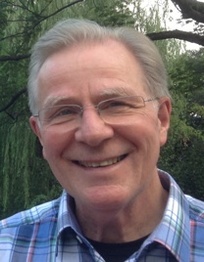
 Dick Allwright Date: Saturday 7 July 2012Time: 10.30-16.30 Main presenters: Dick Allwright with Judith Hanks and Assia Slimani-RollsLocation: Leicester, England Registration here. (Earlybird Delegate Payment Deadline - 27 May 2012) Scholarship opportunity (for Research SIG members only) (Deadline for applications - 15 May 2012) Further details Full Title: Exploratory Practice: Using class time to help teachers and learners develop as practitioners of teaching and learningThis practical workshop will be of particular interest to any teachers who would like both themselves and their learners to better understand their learning and teaching lives together. Format: One-day workshop consisting of input and both presenter-led and participant-led discussions, all related to a number of group tasks. Presenters: Dick Allwright, (Lancaster University, retired) with Judith Hanks (Leeds University) and Assia Slimani-Rolls (Regent’s College London), plus Yasmin Dar (Leicester University), Simon Gieve (Leicester University) and Ana Inés Salvi (Warwick University) OverviewImagine a large room with 200 schoolchildren and 50 teachers presenting their understandings of their learning and teaching lives to each other on posters that they have prepared as an integral part of their learning and teaching practices. This is the sort of thing that happens at the annual ‘EP Events’ in Rio de Janeiro, Brazil. ‘EP’ stands for ‘Exploratory Practice’, a fully inclusive approach to practitioner research, with learners and teachers, as practitioners of learning and teaching, adopting the role of practitioner researchers as their normal way of using classroom time. Using standard classroom pedagogic practices they develop their own understandings of their learning and teaching lives. This whole-day workshop will begin with: - a closer look at these ‘EP Events’ in Brazil: What happens? How do they work? Could such ‘EP Events’ happen here? How might that work?
- a dialogue with Dick Allwright about the origins and nature of EP
We will then consider several case studies that exemplify Exploratory Practice: - an investigation of the challenges for practitioners of implementing Exploratory Practice in an EAP context in Leeds, and the relationships between the principles and practices of EP (Judith Hanks)
- the use of EP as a theoretical framework for the development of a postgraduate certificate in learning and teaching in higher education with a focus on teaching international students in London (Assia Slimani-Rolls)
- other case studies of EP work based at the Universities of Leicester and Warwick will also be included.
Participants in the workshop will be invited to consider how EP principles relate to their own teaching and learning practices, with a focus on inclusivity, collegiality, sustainability, and the consequent development of trust relations. We will then look for ways in which such ideas might be incorporated into participants’ own teaching and learning situations. Details of main presenters:Dick Allwright taught at Essex University, where he pioneered language classroom research, before he moved to Lancaster University in 1978. There, his interest in classroom research shifted towards research as a contribution to teacher, and learner, development , via the notion of ‘Exploratory Practice’. Retired since 2003, he is still actively pursuing his interest in teacher and learner development. Judith Hanks has been teaching English since1987 in Italy, Singapore, at IH London, Lancaster University and (currently) the University of Leeds. She became interested in Exploratory Practice in 1997 and became a core member of the EP Group in Lancaster. She is co-author of The Developing Language Learner (Palgrave Macmillan), with Dick Allwright. Assia Slimani-Rolls researched the relationship between learning opportunities and learning outcomes for her PhD at Lancaster under Dick Allwright’s supervision. Her interests have more recently shifted towards teacher and learner development via EP. She is currently responsible for developing and co-ordinating the learning and teaching agenda across the Faculty of Business and Management in Regent’s College London. Location / car parkingThe event will be held in the Musuem Studies Building (19 University Road - see map), near the top of New Walk, at the west end of University Road. To get there, exit Leicester Station and turn left up London Road and walk up the hill. Cross over to the east side of London Road (the right hand side as you walk uphill) at one of the light-controlled pedestrian crossings. Turn left into University Road at the traffic lights, and left again into the venue site. It is not more than 15 minutes walk from Leicester Station up to the venue. It will be possible to make use of School of Education car parking (1) beside the Fraser Noble Hall, accessed from University Road; (2) in front of the Museum Studies building, accessed from University Road; (3) to the rear of the Museum Studies building, accessed from Princess Road East.There is also public pay-and-display parking on Victoria Park, accessed from Granville Road. Tea/coffee and lunch are provided, included in the registration fee.
Thursday 22nd March, Conference Room: Barra – ‘Research SIG Day’ Presentations: Timetable and Abstracts10.25-11.10: Janet Enever (Umea University, Sweden) - 'Early language learning in Europe: are we delivering the promise?'
In this paper I will provide a short review of the findings from a large scale study of early foreign language learning in Europe (ELLiE 2006-10), funded by the European Commission with further funding from the British Council. This four-year longitudinal study traced the progress of over 1400 primary school children from 6/7 years to 10/11 years, learning foreign languages in seven European countries including: Croatia, England, Italy, Netherlands, Poland, Spain and Sweden. In England, the study concerned French and Spanish, whilst in the six other participating countries the focus was on children learning English as the first foreign language. Specific themes of the presentation will include: i. A comparison of national language policies ii. Factors contributing most effectively to the success of early language learning. iii. Children's linguistic and non-linguistic outcomes. I will present key indicators that have emerged from the study - the largest transnational study of early language learning in Europe today. Delegates will be invited to engage in a discussion of the potential wider relevance of the ELLiE findings for the future of early language learning. Further details of the study are available at . The presentation will also introduce the forthcoming book publication of the study: Enever, J. (Ed) (2012) ELLiE. Early Language Learning in Europe. London, UK: British Council. 11.10-11.45: Coffee Break 11.45-12.45: Deborah Bullock (The British Council) - 'Discovering research – a teacher-friendly approach' (Workshop)The workshop is aimed at teachers and those responsible for teacher development and falls into 4 parts. There will be a short introduction to enable participants to reflect on and discuss their attitudes to reading research, their practices, the benefits, and what factors make research accessible to teachers. I will then go on to briefly introduce the British Council Research Papers Series online: the aims of the scheme, areas of activity covered, details of published and freely available articles in addition to upcoming projects which may be of interest. The bulk of the session is hands-on. Participants will work in groups to come up with ideas on how to make a range of sample texts more accessible and relevant to teachers e.g. guided reading/discussion activities. There will then be feedback including ideas from my own experience as a teacher and trainer. Although the focus of the workshop is engaging with research, engagement in research will also be encouraged at the end of the session. Focusing on their own contexts, participants will be encouraged to see the relevance of the research and will be encouraged to find links, identifying questions and areas which might be worth investigating in the light of what they have read. I will provide a list of resources and suggested further reading and handouts for them to take away so that they can follow up on this. 12.45-13.45: Lunch break13.45-14.15: Maggi Lussi Bell (Zurich University of Applied Sciences, Switzerland) – 'Academic oral presentations – look who’s talking' The talk will begin with a brief explanation of the motivation for my study (my interest in oral exams, especially co-construction of exam interaction, and my doctoral studies). I will outline the context in which the study was set (a university of applied sciences in Switzerland) and describe how academic oral presentations are used as the students’ final EFL exam. The advantages of academic oral presentations as an efficient, effective means of assessment, highly relevant to academic programmes, will be given. The likelihood that their use will increase alongside the growing number of European degree programmes taught in English outside the UK and Ireland will also be mentioned, together with the need to gain greater understanding of issues which may affect their validity. Turning to the study itself, I will give the aims and present my research questions. I will explain my choice of methodology (Conversation Analysis) and outline its principles. I will describe how the data for my study was collected and analysed, and present the results, using extracts from my Conversation Analysis transcriptions to illustrate salient points. The findings shed light on a) the nature of questions posed by examiners (open, closed etc.), b) the nature of examiner additional utterances (e.g. comments on content, corrections), and c) their effects on candidate performance. Implications for testing practice will be discussed and recommendations made to maintain the validity of the exam. 14.30-15.15: Manzoorul Abedin (University of Cambridge, UK) – 'Researching ELT in Bangladesh: practice, perils and pitfalls'The paper is concerned with processes of research enquiry set in a developing country. The context for this work is ELT (English language teaching) research works carried out and published in Bangladesh in recent years. The processes by which researchers reach conclusions are crucially important because they determine the quality of the findings. Drawing on examples of a number of state-level, NGO, institutional and individual research-works, the paper highlights the importance of quantity, diversity and quality of evidence required to fully probe the complex dynamics that influence English teaching and learning in Bangladesh. In doing so, the paper underscores two primary concerns: (1) methodological concerns that discuss the rationale behind apparatus selection, analytical choices, and data interpretation procedures, and (2) theoretical concerns that include synthesising of existing body of research, conceptualisation of constructs and development of arguments. Additionally, the paper considers problems faced by researchers who are outsiders (foreigners or city-based) designing research in non-western or rural settings. These include issues surrounding bureaucracy, politics, economics and culture among others. Overall, the purpose of the paper is to outline the challenges a typical ELT research set in Bangladesh faces by considering the relationship between the research problem, methodological assumptions, instrumentation, and the culture of the research setting. 15.15-15.50: Coffee break
15.50-16.20: Larysa Sanotska (Lviv National Ivan Franko University, Ukraine) – 'Critical thinking: from creative to academic writing' My experience of teaching undergraduate university students allowed to presume that such weaknesses as unclear focus of discussion, vagueness of discourse, or plagiarizing in their library research papers might be caused by several reasons, underdeveloped critical thinking among them. The report is built on the qualitative and quantitative data of the experiment conducted in a multilingual group of bachelor university students (Chinese, and Ukrainian/Russian) in Ukraine. The purpose of the research is to study effectiveness of combining creative-writing activities of ‘free style’ with ‘academic proper’ writing training in teaching EAP students in order to improve their study and writing skills. Considering the fact that, in wider perspective, EAP courses combine teaching Academic English with overall development of academic study skills, critical thinking is among crucial subskills in EAP. Insufficient ability to think critically leads to struggling with studies and, eventually, subconscious plagiarizing. The research proved that developing critical thinking at ‘creative writing’ stage is more enjoyable. Students more willingly learn to focus on clarity of discourse, build proofreading and rewriting skills, and develop paraphrasing techniques. Even a short ‘encounter’ with writing ‘free narratives’, which are not restrained by ‘academic’ limits, provides clear insight into the area of ‘academic –non-academic vocabulary/ structures’, helps distinguish between them by contrasting one with another. Undoubted ‘intrinsic motivation’ stimulus of creative writing alongside with extrinsic motivation, which students already possess enrolling for EAP courses, breaks students’ psychological barriers, allow them to avoid anxiety, and build the bridge between reluctance to write and successful academic writing. 16.35-17.20: Claire Walker and Niamh O'Leary – 'Teacher research – an organizational approach'Enhancing the research skills of EFL practitioners can make a significant impact on both their professional development and quality in the classroom. However, strong support and a clear framework are critical for the success of such a project. Its success depends heavily on the availability of effective mentors in each country in supporting teachers throughout the project. We’ll therefore present a framework illustrated with reference to an actual research programme involving 11 teachers, 9 mentors in 8 different countries in East Asia. Using this innovative programme as a model we’ll focus on the context and the key features central to its design and the implementation model which was used. Reference to participants’ feedback will provide data for evaluating its effectiveness. Based on the research model described above we will highlight key areas which need to be considered such as research questions, course content, participant support, organisational constraints and sustainability. We will also address the challenges we now face with the implementation of such findings across the region. By the end of this presentation conference delegates will be more aware of the challenges of action research as well as the elements to be considered in the design and implementation of teacher research programmes. 17.35-18.35: Research SIG Open Forum [Panel Discussion and SIG Business Meeting]Richard Smith (University of Warwick / Coordinator of the Research SIG) opens the forum by making some general points relating to the Research SIG Day presentations and inviting presenters and the audience to respond. Then comes the Research SIG’s annual report (2011/12) and an opportunity for all present to express their views and contribute to the planning of future activities.
Article Discussion: Second language acquisition, teacher education and language pedagogy_Date: 20-24 February 2012 Article: 'Second language acquisition, teacher education and language pedagogy', by Rod Ellis Guest moderator: Miroslaw Pawlak, Adam Mickiewics University in Kalisz, Poland. Location: ReSIG YahooGroup Download article here.This event is open both to ReSIG members and to non-members. You can join our YahooGroup for free here. How to participate: - Join our YahooGroup at the link above. if you're not a member yet. - Download the article at the link above. - Read the article. - To help you get ready for the discussion, here are a few prompts for discussion, suggested by Mirek:
1. Is there any value in research conducted by scholars who have little experience in actual teaching?
2. Is it at all possible to reconcile the interests of theorists, researchers and practitioners for the benefit of language learning and teaching?
3. What is the role of technical (i.e. theory and research) and practical (i.e. ability to react to the exigencies of the classroom) knowledge in everyday teaching?
4. Which of the approaches mentioned by Ellis to bridging the gap between researchers and teachers is the most beneficial and feasible - that is stating pedagogical implications, making SLA accessible, research-teacher collaboration, teacher research? Are there any other solutions?
5. What research areas are the most promising in terms of bridging the gap between research and teaching?
6. How realistic is teacher research and to what extent can it offer valuable insights for research and pedagogy?
7. What is the role of teacher educators in translating theoretical positions and research findings into guidelines for classroom practice?
8. How useful are the principles listed at the end of the article for designing and running a course for future teachers?
One-Day Workshop: Introduction to Qualitative ResearchDate: 12 May 2012 Presenter: David Nunan Location: Graz, Austria Registration here.(Online registration closes 27 April) Congratulations to Kashmir Kaur, winner of the ReSIG Scholarship for attending this event. Further details: Title: Qualitative research in language educationFormat: One-day seminar consisting of lecture input, presenter-led discussion, and a number of group tasks. Presenter: David Nunan, Ph.D. Emeritus Professor of Applied Linguistics, University of Hong Kong Vice-President for Student Affairs and Dean, Graduate School of Education, Anaheim University, California Overview The aim of this one-day seminar is to explore theoretical and practical aspects of qualitative research in education. There will be three overlapping phases in the seminar. I. The ‘big picture’ In the first part of the seminar we will take a ‘big picture’ look at the research enterprise, discussing and clarifying the following issues and questions: - What do we mean when we talk about research? What are the ‘ground rules’ that differentiate it from different ways of knowing?
- What is the purpose of research? Why bother?
- What are some of the questions and issues that are currently being addressed by researchers in the field of language education?
- What are some of the gaps in our knowledge base?
II. Taking a closer look at qualitative researchThe focus of this part of the seminar is on qualitative research. We will look in greater depth at the characteristics of qualitative research that differentiate it from quantitative research. We will look at a range of methods for data collection and analysis, including case study, introspection, elicitation and observation. We will also look at ‘mixed methods’ research which, as the name suggests, deploys a range of data collection and analysis methods from both quantitative and qualitative paradigms. III. Developing a research plan In the final part of the workshop, we will look at steps in the process of developing a research plan, and at the pitfalls and possible solutions to the pitfalls that can occur during the research process.
_Article Discussion: Research into practice: Vocabulary Date: 16-20 January 2012 Article: 'Research into practice: Vocabulary', by Paul Nation Guest moderator: Anthony Bruton, Universidad de Sevilla, Spain. Location: ReSIG YahooGroup Download article here.This event is open both to ReSIG members and to non-members. You can join our YahooGroup for free here. How to participate: - Join our YahooGroup at the link above. if you're not a member yet. - Download the article at the link above. - Read the article. - To help you get ready for the discussion, here are a few prompts for discussion, suggested by Anthony:
1. What do you consider are the priorities for research into formal EFL vocabulary learning? And ESL?
2. Do you think Extensive Reading is a viable means of vocabulary expansion in typical FL contexts? Would on-line exposure and task be more accessible and as effective?
3. Do you think some tasks used in EFL vocabulary research are inappropriate: e.g. fill in the blanks; multiple-choice; write sentences with these words; etc.
4. Do you think levels tests should not only be language-specific, but context-specific (e.g. according to country).
5. Did you know about the involvement load hypothesis? If so, is it of any particular pedagogical consequence?
- During the week of 16-20 January, make sure you check the posts on the YahooGroup at least once a day and add your contributions.
_Article Discussion: Language teacher research engagement Date: 12-16 December 2011 Article: Language teacher research engagement, by Simon Borg Guest moderator: Simon Borg, University of Leeds, UK Location: ReSIG YahooGroup Download article hereThis event is open to ReSIG members and non-members. You can join our YahooGroup for free here. How to participate: - Join our YahooGroup at the link above. if you're not a member yet. - Download the article at the link above. - Read the article. - To help you get ready for the discussion, here are a few prompts for discussion, suggested by Simon:
1. Are there any claims in the study which either support or contradict your personal experience and/or beliefs?
2. In your context, is it reasonable to expect teachers who are not engaged in formal study to engage with language teaching research? Why or why not?
3. How do you feel about the notion of teachers as consumers of published research?
4. In your context, is it reasonable to expect teachers who are not doing a course (e.g. an MA or Delta) to engage in language teaching research? Why or why not? To what extent do the barriers listed in Table 2 pertain? Are there any others in your context?
5. The article argues that inquiry which is not made public should not be called research. What are your views on this?
6. The literature raises concerns about the quality of the classroom-oriented inquiries that practising teachers often undertake. Is it fair to assess such research using the criteria that apply to research more generally?
7. What role can school leaders or departmental heads play in promoting research engagement in their schools? Do you have any positive or negative experience to cite in this respect?
8. What kinds of initiatives in language teaching might increase the extent to which teachers read and do published research? How might associations such as IATEFL contribute to such initiatives?
9. To what extent do the private EFL sector and the state EFL sector face similar challenges in enabling teachers to engage in and with research? Much less evidence exists about the state sector.
10. Respond, in an open-ended manner, to any others issues in the paper which stimulate a reaction in you.
- During the week of 12-16 December, make sure you check the posts on the YahooGroup at least once a day and add your contributions.
How to Combine Teaching and Researching: Focus on Learners and Classroom Language Learning (Pre-Conference Event)Date: 19 March 2012 (10am to 5pm) Presenters: Ema Ushioda (University of Warwick), Richard Smith (University of Warwick) and Sarah Mercer (University of Graz). Location: Glasgow, UK. NEW!: Resources from the event (ppts, handouts, photos of posters etc.) . NEWER! Feedback and further discussion opportunities. NEWEST! Blog post about the event by a participant, Edward Russell Our 2012 PCE explored how teaching and researching can interact with one another in fruitful ways, and discussed practicable methods that teachers may like to consider using for research in their own classrooms. This was the first in a planned series of Research SIG events on Teaching-and-Researching. This was intended to be a practical workshop designed for teachers who are thinking of doing classroom research (for whatever reason), of interest also to postgraduate students who are planning to combine teaching and researching roles. Through a combination of input, discussion and hands-on tasks, we considered the following: - Reasons for combining teaching and researching
- Methods for researching learners and learning (quantitative, qualitative)
- Integrating research tools and ‘tools for learning’
- Balancing teaching and researching roles in the classroom (ethical concerns and responsibilities)
_ _One-day workshop: Questionnaire design and analysis Date: 10 February, 2012 Presenter: Zoltan Dornyei Location: Coventry University, UK
Zoltan Dornyei, Professor of Psycholinguistics at the University of Nottingham, is world-renowned for his research into language learning motivation. He is no less well-known for his expertise in the area of questionnaire-based research methods. Routledge have recently published the second edition of Zoltan's Questionnaires in Second Language Research: Construction, Administration, and Processing.
We moved to this website at the beginning of August 2011. We'd love to hear your views on it, and more generally on what IATEFL's Research SIG should be doing or should be 'for' - whether or not you are a member. Please feel free to comment on these matters below, to introduce yourself, or to start a new thread!
|